A safe space to play, express and heal
Play is a child's natural way of expressing thoughts, feelings and experiences — especially when they haven't found the words yet. Our sessions provide a safe, supportive space for children to explore emotions, process experiences and develop healthier ways of coping.
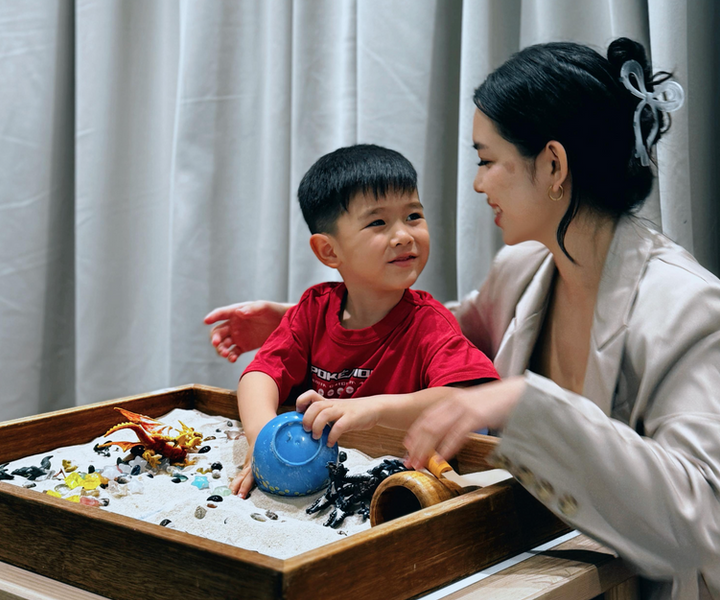
Communicating through play, not words
Through pretend play, storytelling and symbolic expression, children process their inner experiences in a way that feels safe and natural. Our therapists gently support children in making sense of their experiences — even when these are not fully conscious or easily verbalised.
Play therapy is particularly helpful for children experiencing challenges related to anxiety, anger, low mood, grief, trauma, or other social, emotional and behavioural difficulties.


Play therapy supports children in:
- Understanding and expressing their emotions
- Processing difficult or overwhelming experiences
- Developing coping strategies
- Improving emotional regulation
- Building confidence and self-esteem
- Strengthening relationships with others
The building blocks of play therapy

Emotional Expression
Helping children recognise, name and express big feelings in a safe, supported way.
Trauma Healing
Gently processing difficult experiences and finding a way to express what feels hard to put into words.
Social Skills
Building trust, connection and confidence in relationships with others through shared play.
Improved Behaviour
Translating new coping skills into calmer responses and more confident behaviour day to day.
What Happens During Play Therapy Sessions?
Sessions are child-led and guided by a trained therapist. They may include:
- Pretend and imaginative play
Using toys and stories to explore feelings and experiences. - Art and creative expression
Encouraging self-expression through drawing, painting, and crafting. - Storytelling and role play
Using stories and characters to make sense of emotions and situations. - Sensory-based activities
Engaging the senses to support regulation and emotional expression. - Games that support emotional expression
Fun, structured activities that build skills and encourage emotional understanding.
Working alongside our whole team
Play therapy often works hand in hand with our counselling, occupational therapy and psychology services — so your child is supported as a whole person, not just one area of difficulty.
Still not sure if your child needs play therapy?
A simple conversation can help you feel clearer about your child's next steps.